
Live Oak Floor Plan Tour: One simple choice made them $150k wealthier
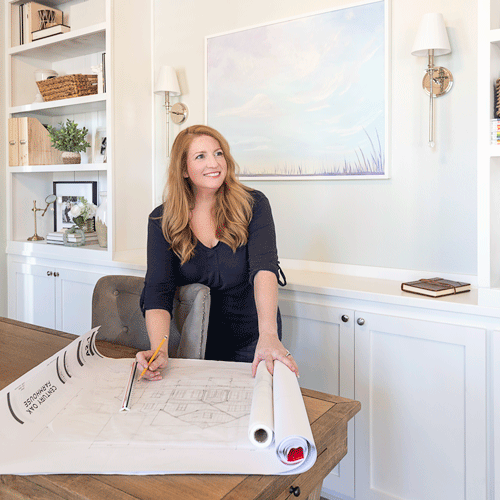
Beautiful Live Oak Floor Plan Build
In this Live Oak floor plan home tour, we walk through a real owner-built home and break down the exact design decisions, layout changes, and cost strategies that helped these homeowners create $150,000–$200,000 in equity from day one. Building a custom home doesn’t have to mean overpaying a builder or sacrificing design quality.
This home is a reverse Live Oak floor plan, thoughtfully customized and executed by owners who chose to act as their own general contractor. The result? A warm, timeless farmhouse that feels intentional, personal, and financially smart.
If you’re considering building your own home, exploring the Live Oak floor plan, or wondering whether being an owner-builder is worth it, this walkthrough offers real-world insight — not theory.
This client was just getting settled into their new home when we visited, so there are of course some projects left to finish, but we know how valuable it is for you to be able to SEE real spaces, and they were so gracious to let us share this tour with you.

Click here to view the video tour
Why the Live Oak Floor Plan Works So Well
The Live Oak is popular for a reason. It blends classic farmhouse proportions with modern openness, creating spaces that feel connected without being cavernous.
As soon as you walk in, the layout feels intuitive. Sightlines to the Living room centered on the front door. Focal points connect the kitchen, living room, and dining spaces, while still allowing each area to have its own identity. This balance is one of the defining strengths of the Live Oak, and the Old Barn Company signature floor plans.
In this particular build, the homeowners reversed the plan to better suit their lot and daily flow — a great reminder that floor plans should adapt to the site, not the other way around.
A Functional Home Office With Character
Just off the main entry, the home office sets the tone. Instead of what would normally be a mop closet, they opted for a functional pass-through.
The lighting fixture was chosen intentionally. It is whimsical, sculptural, and creative, reflecting the homeowner’s personality while still fitting the home’s aesthetic.
Expanding the Powder Room for Everyday Comfort
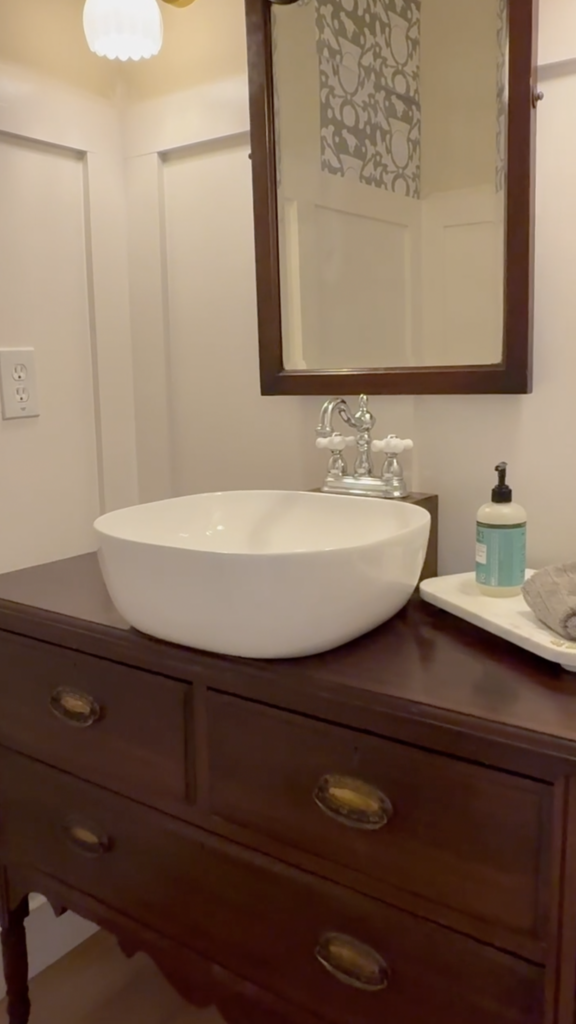
One of the smartest changes in the home was reallocating space to enlarge the powder room. By borrowing square footage from the office closet, the homeowners created a more comfortable half bathroom.
Even better, the wallpaper was custom-designed by the homeowner herself, a graphic designer. The pattern includes illustrated dogs — a deeply personal detail that transforms a small bathroom into a meaningful design moment.
They also repurposed an old dresser for the vanity, adding instant character.
This is a great example of how custom homes don’t need expensive finishes to feel special — they need intention.
The Living Room: Proportion, Light, and Craftsmanship

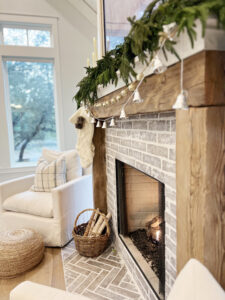
The living room anchors the home with warmth and craftsmanship. A custom mantel, built by the homeowner, adds architectural presence and reinforces the warm character.
Lighting plays a key role here as well. The fixture is scaled correctly for the space, something often overlooked, and complements the room.
This room exemplifies how restraint and proportion often matter more than ornament.
Kitchen Design Choices That Matter Long-Term

The kitchen is where many owner-builders feel pressure to overspend. This home shows how thoughtful planning can deliver both beauty and value.
Countertops
The homeowners selected dolomite countertops, drawn to their natural movement and softness. While they originally wanted granite, availability and selection challenges led them here — a common real-world scenario that many builders face.
The homeowner recommends if you choose Dolomite for your counters, to go with a more rounded edge profile, because the corners may chip with a squared edge.
Layout Changes
Instead of a traditional range, they opted for double wall ovens, which works for the way they live and cook. Cabinets were taken all the way to the 10-foot ceiling, maximizing storage and eliminating wasted space.
Windows vs. Cabinets
One window was removed on the sink wall to gain additional cabinet space. In hindsight, they note that a larger pass-through window could have been a great entertaining feature, especially for outdoor gatherings.
Cabinets & Backsplash
The cabinets came from a local supplier that also handled assembly, reducing labor stress. For the backsplash, leftover countertop material was repurposed. They made a beautiful curved backsplash the feature of the hutch area.
Pantry and Flex Spaces That Add Value
The pantry is generously sized and currently unfinished. Open shelving provides immediate functionality, while future cabinetry and counters will be added later.
In the Bonus room over the garage, a flex space serves multiple roles:
- Storage
- Office
- Workout area
This adaptability is a hallmark of smart owner-builder planning. Not every space needs to be fully finished on day one to be valuable.
This client knew they wanted to utilize this space, so we raised the knee walls about 3′ from the original plan to allow for more height and a wider usable space.
Tight budget – how to save on your home build
This is a good time to point out that when the budget is tight, instead of reducing quality throughout the home, it is often better to put some things off for a later date when your wallet recovers. The things that are best to wait on are built-ins (like they are doing in this client build in their mud, laundry and pantry), and anything that can be added later with little to no demo.
For more about saving money on your home build, check out this blog post: https://oldbarncompany.com/2023/05/devastating-home-build-estimate-6-ideas-to-save-big-money/
Another way they chose to save was using smaller windows and doors that top out at 6′-8″ instead of 8′-0″ as originally designed. The windows facing the front porch, and the front door itself, they kept taller and top out at 8′-0″.
Primary Suite: Practical Luxury
The primary bedroom maintains simplicity with two well-placed windows, allowing light without unnecessary expense.
In the bathroom, large-format porcelain tile on the walls pairs with marble hex tile on the floor — durable, timeless choices that feel elevated without being flashy. We recommend always using porcelain vs ceramis in bathrooms, and the large format in the shower is a smart choice to reduce grout lines, making for easier cleaning.
A standout lesson here comes from the mirrors: purchased affordably, then customized with paint. When one broke due to improper mounting hardware, the replacement was sourced during a clearance sale, proof that flexibility saves money.
Secondary Bedrooms & Future Expansion
The secondary bedrooms follow the same philosophy: good bones first, finishes later if needed. Light fixtures are still wrapped, hardware may change, but the layout works.
This plan allows for:
- A full staircase without turns – the original plan has a landing to turn and a few more steps, but in this build, they made the coat closet in the foyer smaller, allowing the full flight of stairs to fit without a turn.
- Substantial storage in the walk-out attic space
- Potential future bedroom and bathroom
The Real Win: Owner-Builder Equity
After completion, the home appraised at $150,000–$200,000 above build cost.
Here’s why:
- The appraisal reflects what it would cost to have a builder build this home.
- Insurance replacement cost came in at $200/sf
- Their actual cost was closer to $150/sf
That spread is instant equity — created purely by managing the build themselves.
This is exactly why the Bootstrap Builder approach can be so powerful when done correctly.
Final Thoughts: A Floor Plan That Grows With You
The Live Oak floor plan delivers flexibility, warmth, and long-term value — especially when paired with intentional owner-builder decisions.
From smart layout changes to delayed finishes and future-ready bonus space, this home proves that building your own house isn’t about cutting corners — it’s about putting money where it actually matters.
If you’re thinking about building, this tour is proof that thoughtful planning pays off.