
How to Build a Custom Home: What to Do Before You Start
Building a custom home is the dream of a lifetime, but for many families, the “dream” quickly turns into a “chicken and egg” problem. Do you pick out the floor plan first, or do you find the land? How do you know what you can afford if a builder won’t give you a price without a set of plans?
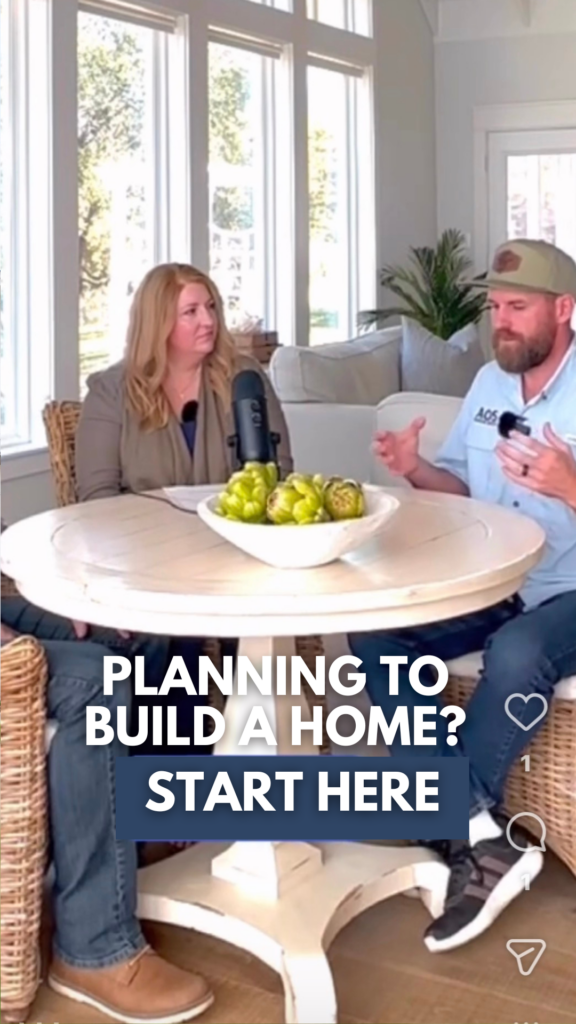
To clear up the confusion, Cody and Jessica from The Old Barn Company sat down with BJ Oliver of All-Over Solutions, a local builder in Granbury, Texas, to discuss the most common questions from first-time home builders.
If you are planning on building soon, here is exactly where you need to start.
Watch this video where we discuss these topics
1. Define Your Lifestyle Before Pinterest
It is easy to get lost in the endless scroll of Pinterest boards, but BJ Oliver warns against starting there. Before you fall in love with a specific aesthetic, you need to understand your family dynamic.

- Ages of your kids: Are they young and in need of a nursery, or are they moving out in six months?
- Current Lifestyle: Think through how you use your home right now rather than building a five-bedroom house you might not need in two years.
- Long-term Planning: Your home should reflect the stage of life you are in today and where you are headed tomorrow.
2. The Home Building Golden Rule: Land Before Plans
The biggest mistake many people make is buying a set of house plans before they have secured their lot. As Jessica points out, “We can always adapt a plan to fit your land, but it’s much harder (nearly impossible) to adapt land to fit a floor plan”.
Your land determines your design in several critical ways:
- Lot Width: Many popular designs are very wide, but if you buy a narrow 50-foot lot, those expensive plans you purchased will be useless.
- The View: If you have a beautiful view in the back, you want windows placed to take advantage of it.
- Privacy: If you have close neighbors, you may want to avoid windows facing the sides.
- Slope: a significant slope may require a basement or lots of dirt work which will affect the budget and floor plans.
Stop! Do not buy a house plan until you know where the house will sit.
3. Home Building Financial Prep: Use a Local Bank
Construction loans are a “whole different beast” compared to standard mortgages. Cody and BJ both strongly recommend using local banks over national institutions for new construction.
Local bankers often provide:
- Better Relationships: They are part of your community, and you aren’t just a Social Security number to them.
- Flexibility: They tend to be more flexible if conventional lending paths aren’t the best fit for your situation.
- Smoother Processes: Local banks are often more familiar with the local builder approval process and the specific requirements of construction draws.
4. Solving the “Chicken and Egg” Budget Problem
How do you figure out how much you can afford when builders won’t give you a cost-per-square-foot without a plan?
While every builder is different, BJ Oliver suggests looking for a builder who will give you a rough idea based on an example house to help you wrap your mind around the costs.
In this example house, you’ll outline your house wants without actually having plan like:
- about 600 SF of covered porches
- 3-car garage
- 4 beds, 3.5 baths, 1 tiled shower
- List additional spaces that would affect cost like a library with bookshelves, a sun room with lots of windows, a scullery/butler’s pantry with additional cabinets
- a large kitchen with stone countertops, cabinets to ceiling
- mid-range appliances
- mid-range windows
- slab foundation
- 10′ ceilings on first floor, 9′ ceiling on 2nd floor
- 80″ hollow core interior doors
- 2 story, 1 staircase
- vaulted living room
- LVP flooring, tiled baths
- one fireplace insert (not full masonry)
- board and batten exterior with about 10% brick
- a 200′ concrete driveway
- 3200 SF of heated space
Knowing these variables a builder can give you a decent ballpark cost. And you will know if you need to cut back in some areas or if you’re good to proceed to look for house plans.
To get your own ballpark estimate, try these steps:
- Look Locally: Don’t look at national social media groups for pricing, as costs vary wildly across the country.
- Research Local Real Estate: See what new custom homes are selling for in your specific area. You can divide selling price by SF to get a general cost/SF in your area. Note: This will include land value.
- Production vs. Custom: Keep in mind that “tract homes” built by giant companies like D.R. Horton will always be cheaper because they “stamp” the same plan over and over. A custom home—even one from a stock plan—is a unique build for your contractor.
- Don’t give up if the estimate is more than you hoped. Ask the builder for suggestions to cut costs. Can you cut some square footage? Could you general contract the build and take charge of the budget with the guidance of the Bootstrap Builders Program? Could you build some parts in phases?
5. Hidden Costs That Can Blow Your Home Build Budget
When building a custom home, one or two line items can change your budget by tens of thousands of dollars.
The Foundation and Dirt Work
The flatter the land, the lower the cost. If your lot has a significant slope, you could easily spend $100,000 or more just on dirt work, retaining walls, and site prep before the house even starts.
Rock and Utilities
In areas like North Texas, hitting rock is a common issue. If your builder has to “bust up rock” for septic systems, electrical lines, or water pipes, your costs will skyrocket.
Driveway Length
A house located 500 feet from the road will cost significantly more in “flatwork” (concrete) than a house sitting right off a city street.
Material Selections
Selections like flooring can change your price by $10 per square foot. On a 3,000-square-foot home, that’s a $30,000 difference on just one material. Similarly, a slab foundation is much cheaper than a basement, and quartzite counters will always outprice laminate.
Final Thoughts
Building a home is a journey of a thousand steps, but the first step must always be grounded in reality, not just a Pinterest board. Start with your family’s needs, find the right piece of land, and secure a local banking partner.
When you’re ready to start the design process or find your builder, reach out to the pros:
- Floor Plans & Design: Old Barn Company
- Custom Building (Granbury, TX): All-Over Solutions
May I ask what his cost estimate would be on the house you all described?
Thanks!
https://shorturl.fm/y8niL